How to get past the gatekeeper: honest replies to "what is this regarding?"
How to get past the gatekeeper when they ask why you are calling? Get honest replies, a ten-second opening, a call sheet and what phone screeners ask.
 Michael Doyle11 min read

Give the gatekeeper your name, your company, and one specific reason for the call. Then ask for the buyer by name.
Apple says an iPhone can ask unsaved callers why they are calling before it rings. Your reason has to work on a person and on a phone.
What you need before you start
Have these ready before you dial:
The buyer's full name and job title.
The company's main phone number.
One specific reason for the call, in one sentence.
A phone number or email address the buyer can reply to.
A note of what you will change on the second try.
This guide is for founders, SDRs, and small teams making B2B sales calls. It stops at the transfer.
For what to say once the buyer picks up, see cold call scripts.
It does not cover walking into an office, emailing an executive assistant or calling regulated buyers.
What a phone screener asks before it rings your buyer
The first gatekeeper can be a phone instead of a person. Two phone makers document how it works.
iPhone: Screen Unknown Callers
An iPhone's Phone settings offer three choices: Never, Ask Reason for Calling, and Silence.
With Ask Reason for Calling on, the caller is asked why they are calling before the phone rings.
Apple advises people to save important numbers in Contacts so those calls always come through. Screening is off while the phone is roaming.
Apple's support page lists all three options.
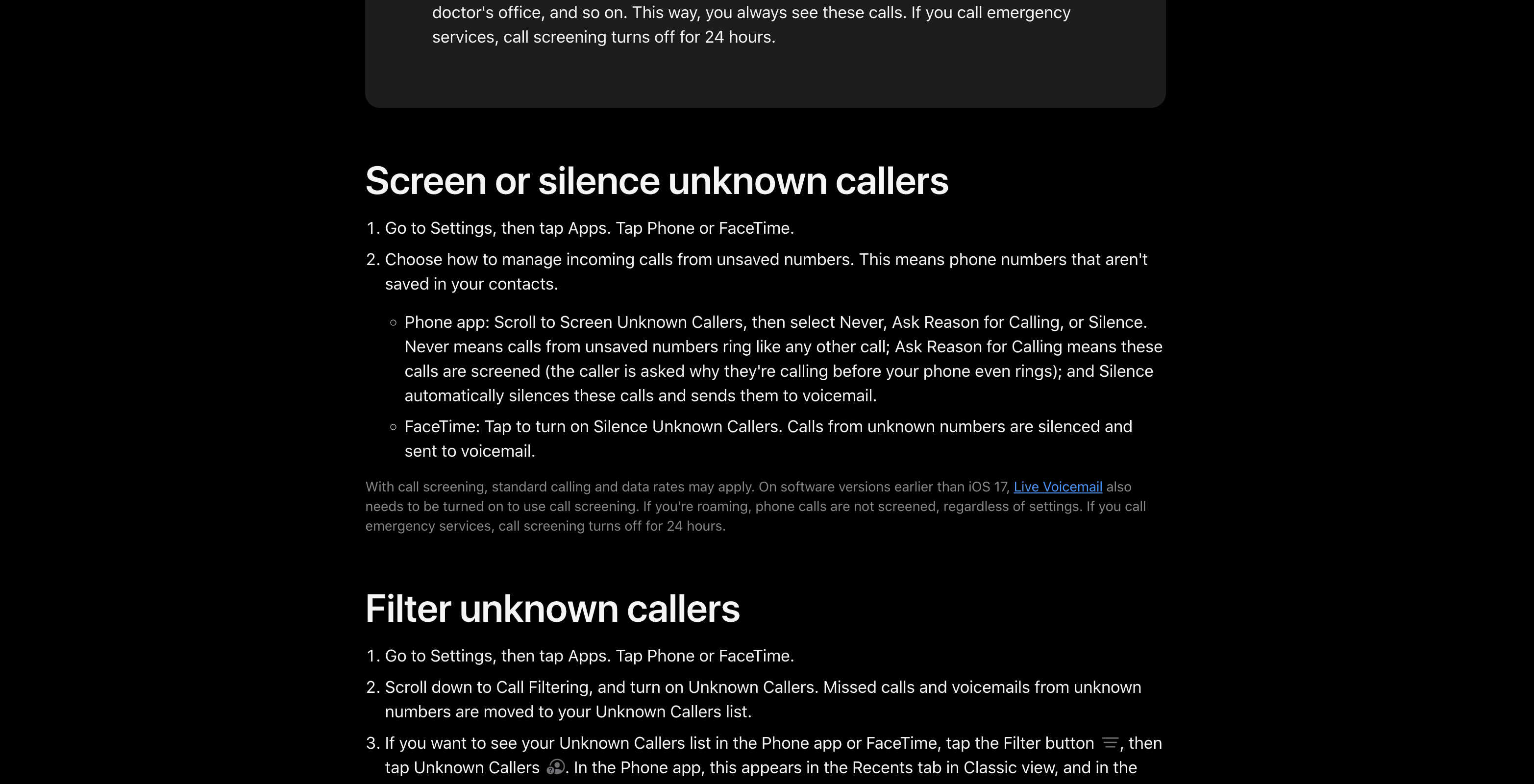
Anything you say to a screened call has to make sense with no other context.
Pixel: Call Screen
Google says that with Call Screen, the phone answers the call and asks who is calling and why. The owner gets a live transcript of the answer.
Calls flagged as spam are hung up. Saved contacts are not screened, and automatic screening does not run while roaming.
It is available on Pixel phones in Australia, Canada, Ireland, the UK, and the US. On a Pixel 7 or later, it can screen first-time callers.
Screeners ask for the same three things a receptionist does: your name, your company, and your reason.
Which gatekeeper you are talking to
A receptionist, an executive assistant, an office manager, and a phone screener check different things.
This table gives each one an honest first line and a next move.
Gatekeeper | What they check | Honest first line | If they say no |
|---|---|---|---|
Receptionist | Your name, company, and purpose before a transfer | "Hi, this is Sam from Example Packaging, calling for Jordan Lee." | Ask for the best time to call back. |
Executive assistant | Whether the call is worth the buyer's time | "I'm calling about box prices for your bread lines. What is the best way to reach Jordan?" | Ask what the assistant would forward, then send two lines by email. |
Office manager | Whether you are a customer or a seller | "I'm calling about packaging. Who handles supplier orders?" | Ask for the name and email of that person. |
Phone screener | Your spoken answer to who and why | "Sam, Example Packaging, for Jordan Lee about box prices. My number is 555 0100." | Leave the same lines as a voicemail. |
Pick the row that matches who answers, then use its first line.
Four steps from main line to buyer
Each step ends with a line that tells you it is done.
Step 1: Get the buyer's name and a number
What happens: Find the buyer's full name, job title, and the company's main line before you dial. If you cannot find a name, call and ask which role handles the topic.
Use that role as your starting point.
Done when: you can say the buyer's name without reading it.
Step 2: Say your name, company, and reason in the first ten seconds
What happens: Say your name and company, then name the person you want. Give one specific reason in one sentence.
Be plain and polite, and treat the gatekeeper as the person who can help you.
Two examples of the same opening, one for each kind of gatekeeper:
To a receptionist: "Hi, this is Sam from Example Packaging. I'm calling for Jordan Lee about box prices for your bread lines. If Jordan is out, what is the best number?"
To a phone screener: "Sam, Example Packaging, for Jordan Lee, about box prices for your bread lines. My number is 555 0100."
Done when: the gatekeeper transfers you, gives you a name or number, or offers to take a message.
Step 3: Answer the lines gatekeepers repeat
What happens: Gatekeepers reuse a short set of lines, and each one has an honest reply. Reword these examples in your own voice.
For replies to the buyer after the transfer, see objection handling in sales.
This table gives one honest reply for each repeated line, plus a next move.
They say | Honest reply (example) | If they repeat it |
|---|---|---|
"What is this regarding?" | "It's about box prices for your bread lines. Is Jordan the right person?" | Say the same reason in fewer words, then ask who else handles it. |
"Send me an email." | "Happy to. Who should I address it to, and what address should I use?" | Get the name and address, send it the same day, then call again. |
"Not interested." | "Understood. When is the best time to reach the person who orders packaging?" | Thank them and ask for the buyer's name. |
"This company does not take sales calls." | "Thanks for telling me. Is there an email address for supplier offers?" | Send to that address and say so in the first line. |
"Is he expecting your call?" | "No, this is my first call. It's about box prices." | Ask when the buyer is usually free. |
None of these replies claims a relationship that does not exist.
Done when: you have answered the line in one sentence and asked one follow up question.
Step 4: Pick a way back in
What happens: If the gatekeeper will not transfer you, choose a second route. This table compares five routes on what each needs and what can go wrong.
Route | What you need | Works best when | Main risk |
|---|---|---|---|
Main line again | A new first line | You were cut off or reached the wrong person | You get the same answer |
Direct dial | A number the buyer or company has published | The main line keeps screening | Unknown numbers often go unanswered |
Referral | A name inside the company | A colleague gave you a name | You need the colleague's okay to use it |
LinkedIn message | The buyer's profile | You have a name but no number | The message may go unread |
The buyer's email address | The gatekeeper asked for an email | It may be filtered or ignored |
For the email route, see cold email outreach. If you leave a voicemail, say your name, company, reason, and number, then say the number again.
Done when: you have a named person, a direct number, or a dated second call.
What the rules say when you call a business
This section covers calling hours and honesty. It is not legal advice, and state rules can add limits the federal rules do not.
Calling hours
The FTC's calling time rule, as published in the eCFR, covers calls to a person's residence. It sets the window from 8:00 AM to 9:00 PM, local time at the called person's location.
The rule's text names a person's residence, not office lines. I'd still call offices during normal business hours.
The 2024 FTC change
In March 2024, the FTC announced a final rule. It "expands prohibitions against misrepresentations" to business-to-business telemarketing calls.
The announcement gives no example about a receptionist or a claimed relationship. Treat a made-up tie as off limits anyway.
Call sheet to fill in before you dial
Copy this and fill in one sheet for each buyer.
Buyer name and title:
Company main line:
Opening line (name, company, one reason):
Reply route (a number or email the buyer can use):
If they ask what this is regarding:
If they say send an email (name and address):
If the call is screened (same line, plus my number):
Next call (date and new first line):
Change the opening line on the next call, not the reason.
When the answer is still no
The usual dead ends
Staff in a 2017 Ask a Manager thread with 333 comments describe how they handle sales callers.
Some send them to a dummy voicemail or a generic email address, and some let follow-ups go unanswered.
Symptom | Cause | Fix |
|---|---|---|
You land in a general voicemail | The call was routed away as a sales call | Call again with a new first line and ask who handles the topic. |
You sent the email and heard nothing | The address had no named owner | Address it to a named person and repeat the call's reason in the first line. |
The call goes straight to voicemail | The phone may be screening unknown numbers | Leave your name, company, reason and number, then send the same note by email. |
A message was taken and not returned | The message had no clear reason or number | Leave all four details and say which day you will call again. |
If the blocks repeat, plan your touches across calls and email as in a sales cadence.
What a voicemail has to carry
Pew Research Center surveyed 10,211 US adults from 13 to 19 July 2020. It asked what they do with cellphone calls from unknown numbers.
Of those adults, 19 percent answer the call. Another 67 percent do not answer but check voicemail. The last 14 percent ignore both the call and the voicemail.
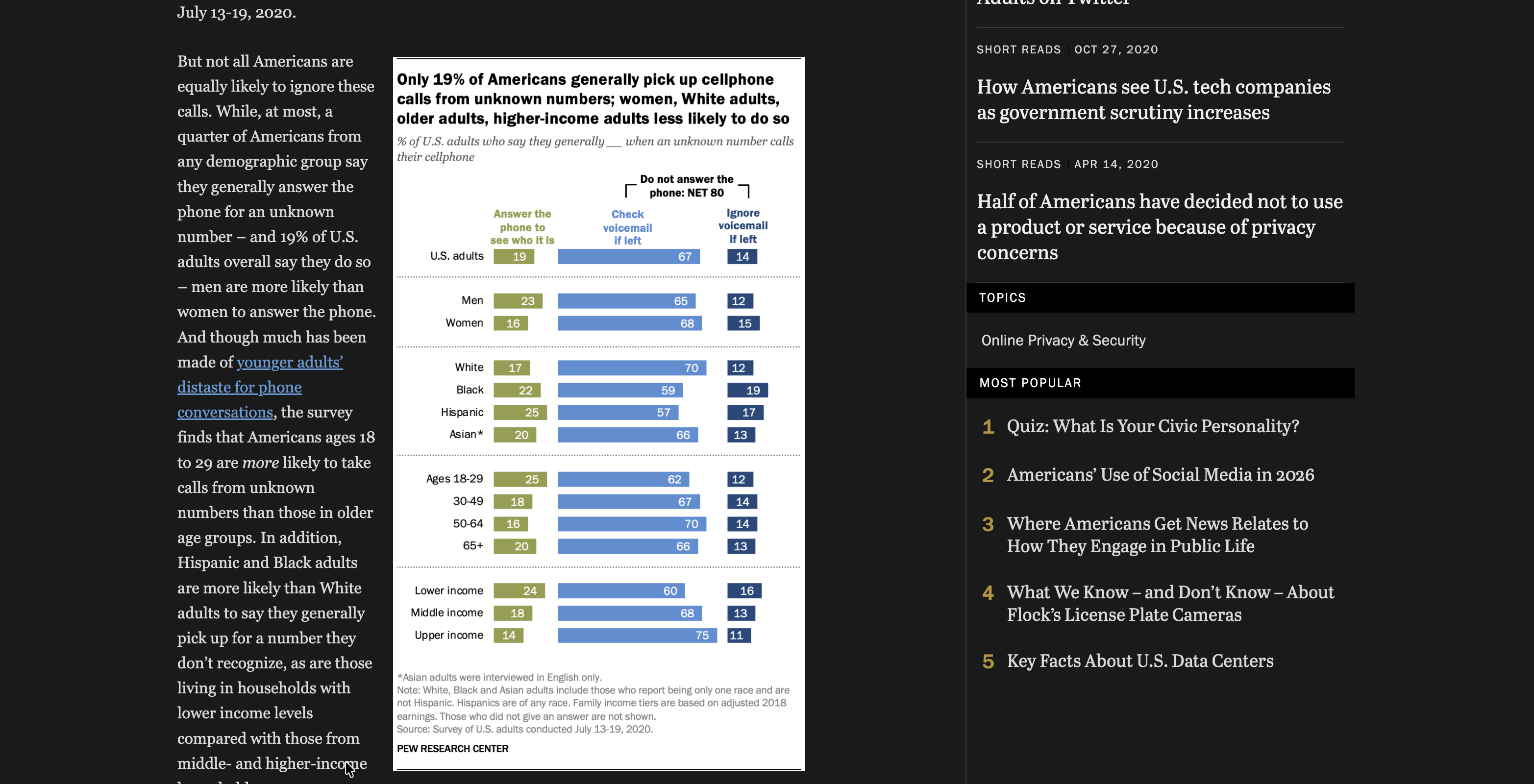
Your voicemail has to carry your name, company, reason, and number on its own.
What the gatekeeper sees on their side
Staff in the same thread describe what they weigh before they connect a caller.
What staff check before they transfer a call
Staff asks for the caller's name, company, and purpose first.
A vague answer reads as a sales pitch.
Some ask outright whether it is a sales call.
Claimed ties to the buyer get checked with the buyer before a transfer.
"Not available, can I take a message?" is said even when the buyer is at the desk.
A short, true reason is what these checks look for.
When they ask if the buyer is expecting your call
If the buyer has not asked to hear from you, the honest answer is no. Say it in one breath with your reason: "No, this is my first call. It's about box prices."
A claimed tie like "returning a call" gets checked. A false one can end the call. Then ask when the buyer is usually free.
FAQ
How do you defeat a gatekeeper without lying?
You do not need to beat them. Give your name, company and one true reason, then ask who handles the topic.
A clear, true reason is the easiest thing for a gatekeeper to pass on.
What should you never say to a gatekeeper?
Never claim a tie you do not have, like returning a call or knowing the buyer. Staff checks those claims with the buyer, and a false one ends the call.
A vague reason also fails, because staff read it as a pitch.
Should you leave a message with the gatekeeper?
Yes, when they offer to take one. Leave your name, company, reason, and number. Ask who took the message, and say which day you will call again.
How many times should you call before you stop?
No source sets a number, so treat any number you see as a guess. I'd change the opening line after two blocked calls, then add email or LinkedIn.
Do gatekeeper scripts still work now that phones screen calls?
Yes, if the script is short and true. A phone screener asks the same two things a receptionist does, so one clear line works on both.
Dial once with the sheet filled in
Pick one buyer, fill in the call sheet, and make one call with the opening line you wrote. If the gatekeeper asks what it is regarding, answer with the same reason.
If the call is blocked, send that reason by email the same day. If you cannot say the reason in one sentence, do not dial yet.
Guidance and sources reviewed 20 November 2026.