

Cold emailing for a job means finding the person who could hire you, usually the hiring manager, and sending them a short, personal email before you apply through a job board. Name a real reason for reaching out, ask for one small next step, and follow up two or three days later if you hear nothing back.
What you need before you start
This is not a mass strategy. It works one contact at a time, and some career centers call it a networking email for a job rather than a cold email. Same idea, same steps.
One specific company or role in mind. Cold email works best aimed at a single target, not blasted to fifty companies with the same message.
The name of a real person: a hiring manager, a team lead, or someone already doing the job.
Their work email address, or the pattern the company uses for email addresses.
A resume ready to attach or link, and one honest reason you are reaching out to this company specifically.
Fifteen to twenty minutes for research before you write a single word.
This works for reaching a specific company before or instead of applying through a job board, following up after a referral, cold emailing for an internship, or getting in front of a hiring manager before a role is posted. It does not work for government jobs, union positions, or any employer that requires every applicant to go through a formal portal. Sending the same message to fifty contacts is not cold emailing, it is spam, and it gets treated that way.
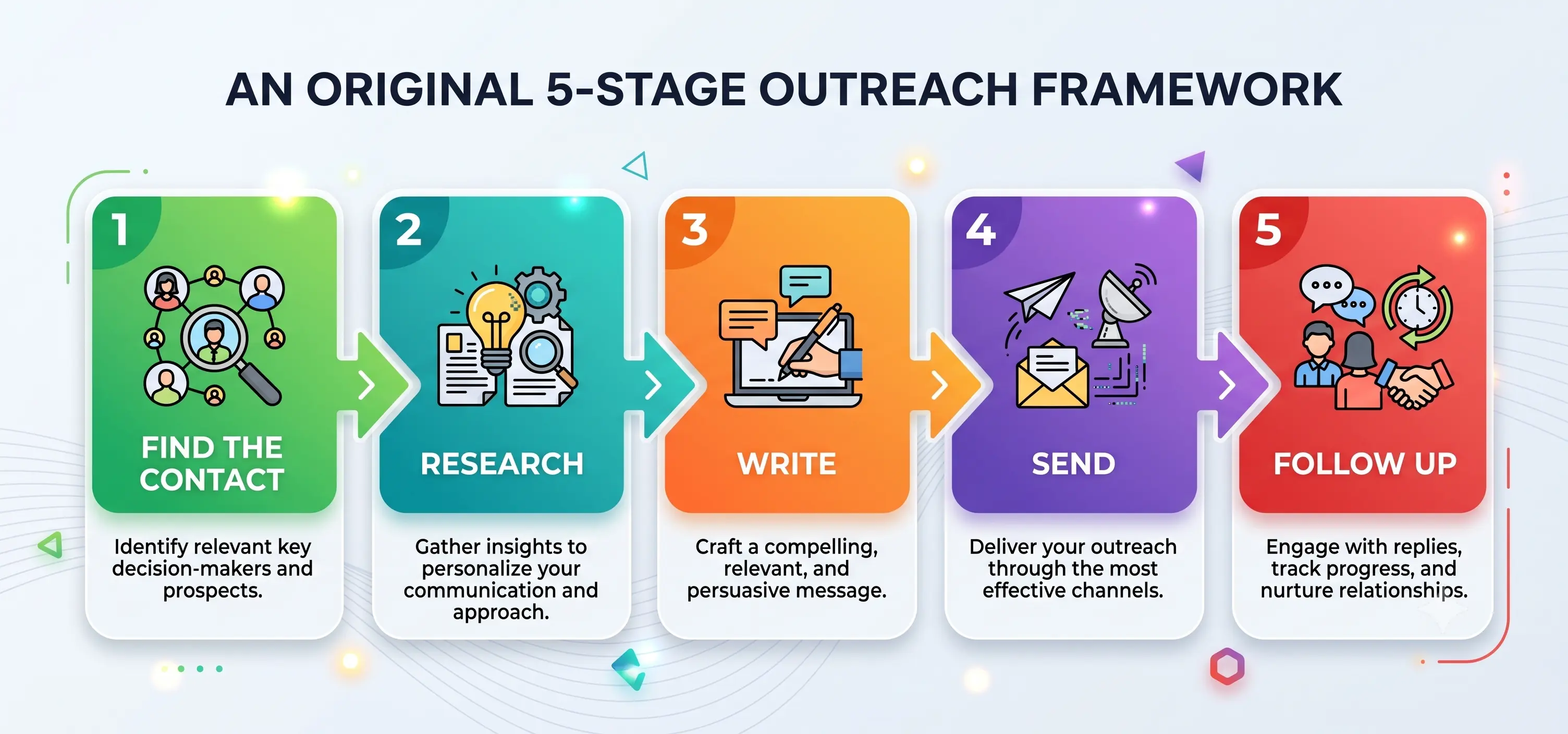
Stage 1: Find the hiring manager's email address
What happens: You identify one specific person, not a department inbox, then confirm their email address.
Search the company's team or about page for a name and title that matches the department you want. Confirm that person still holds the role by checking their LinkedIn profile. Then check the company's email pattern with a free email finder tool such as Hunter's search field, which shows the format a company uses (first name, dot, last name, at the company domain, for example) without requiring a paid account.
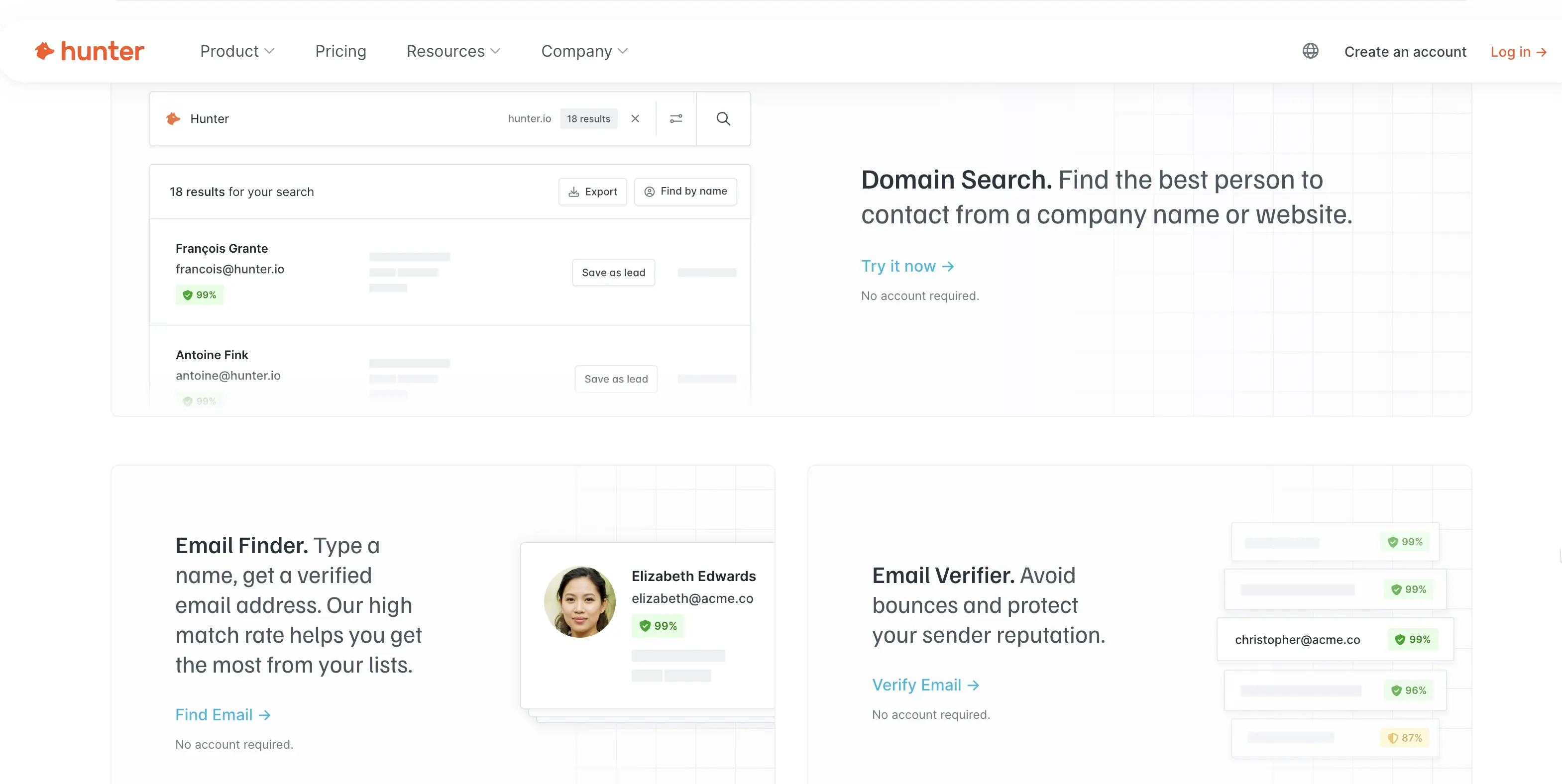
If a finder tool cannot confirm the address, apply the pattern you found to the name you have, and double check the spelling of both before you send anything.
Done when: You have one named person, their job title, and an email address you are reasonably confident is correct. Not info@, not careers@, not a contact form.
Stage 2: Research the company and the person
What happens: You gather two or three specific details you can honestly reference in the email.
Read the company's recent news, blog posts, or product pages for something concrete: a launch, a hire, a project. Check the contact's recent activity on LinkedIn for a shared interest, a talk they gave, or a post they wrote. Look for a detail specific enough that it could not apply to any other company on your list.
Done when: You can write one sentence that proves you researched this company, not a hundred others.
Stage 3: Write the email
What happens: Research becomes a short, specific message with one clear ask.
A cold email for a job has five parts: a subject line, an opening line, the reason you are reaching out, one request, and a sign off. Keep the whole message between 50 and 125 words. Emails in that range are the ones people actually finish reading on a phone screen, and reply rates drop off sharply once a message runs past 200 words, according to Hunter's own analysis of cold email length.
Cold emails are not cover letters. As Forbes contributor and cold email consultant Heather Morgan put it, keep it short: three to five sentences, max.
Read Also: Cold Email Templates that Still get Replies When Everyone Uses the Same Ones
Cold email subject line for a job
Skip anything that sounds like a mass mailing. A subject line built around the role and the company, written the way you would title an email to a colleague, reads as personal instead of promotional. "Question about the marketing role" or "Fellow [industry] person, quick question" both work better than "Application for open position" because they sound like one human wrote to one other human.
What to say in the body
Open with the specific detail from your research, not your name and degree. State the reason you are reaching out in one sentence. Make the ask small: a fifteen minute call, an answer to one question, or feedback on your approach, not a job outright. This request is the call to action, and it should be small enough that saying yes costs the reader almost nothing. According to career guidance from Amherst College's Loeb Center for Career Exploration, starting with a softer request, like an informational interview, builds rapport before you ask for anything bigger.
Done when: You can read the email out loud in under twenty seconds and it still makes sense.
The template
Copy this and fill in the brackets. Delete anything that does not apply.
Subject: Question about the [Role] team at [Company]

Hi [Name],

I came across [specific detail: a project, a post, recent news] and it's part of why I've been following [Company]'s work in [industry or area].

I'm a [field or role] with experience in [one relevant skill or result], and I'd love to ask you one question about how the [Role] team approaches [specific topic].

Would you have fifteen minutes for a quick call this week or next? Happy to work around your schedule.

Thanks for considering it,
[Name]
[One line: phone or LinkedIn link]
Follow up template, for three days later if you hear nothing back:
Subject: Re: Question about the [Role] team at [Company]

Hi [Name],

Following up in case my last note got buried. Still hoping to ask you that one question about [specific topic] when you have a few minutes.

No worries if now isn't a good time.

[Name]
The first cold email I sent for a job search took close to an hour to get right, mostly because I tried to fit my whole resume into three paragraphs, and it got no reply. [ABEER STAT: exact number of cold emails sent before the structure above was settled on] emails later, using the structure in this guide, a single email took under [ABEER STAT: minutes it took to write one email using this structure] minutes to write and got a reply in [ABEER STAT: number of days between sending and getting a reply]. The difference was not luck. It was cutting the email down to one research detail and one small ask.
What the hiring manager actually sees
A cold email lands in an inbox next to internal threads, not next to a stack of job board applications. Most people scan the subject line and the first sentence in under ten seconds and decide then whether to keep reading. A message that opens with a real detail about the company reads as researched.
A message that opens with "My name is" and a resume summary reads as a form letter that missed the actual job posting, and gets treated the same way.
If the ask is small and specific, a reply often comes as one or two lines: a yes, a redirect to the actual hiring contact, or a short answer to the question asked. A reply that includes a next step, like a call time, is the strongest signal the email worked.
The same reading happens on the business side of an inbox, and the five stage cold email outreach process covers what the receiving system checks before any of this reaches a person.
Cold email follow up for a job: mistakes and fixes
Mistake: sending the same message to a long list of contacts. A hiring manager who has seen the identical email forwarded from a colleague, or posted in a group where three other people used it, will not reply. Fix: write one email per company, built from that company's own details.
Mistake: asking for a job in the first line. A direct ask for open roles reads as a mass application with extra steps. Fix: ask for one small thing, a short call or one question answered, and let the job conversation happen naturally if there is a fit.
Mistake: a wall of text. A three paragraph history of your career loses the reader before the ask. Fix: cut to 50 to 125 words and one clear request, as covered in Stage 3.
Mistake: no follow up. Most replies to cold outreach do not come from the first message. On a professional discussion board, one user asked whether cold emailing recruiters actually works, and the replies pointed to the same gap: people give up after one email instead of sending a short follow up. Fix: set a reminder for three days out and send the follow up template above.
Read Also: Cold Email Follow up Templates that get Replies after the First one Fails
Cold email vs cover letter, and other close calls
A cold email is not a cover letter with a different name. A cover letter is reactive: it goes out with a resume for a role that is already posted. A cold email is proactive: it goes out to a specific person, often before a role exists publicly, and it is far shorter. If you are deciding which one a situation calls for, or comparing cold email against a LinkedIn message for the same contact, that comparison has enough nuance for its own guide. This article covers the cold email itself, start to finish.
Approach | When to use it | Typical length | Where it goes |
|---|---|---|---|
Cold email | Before or instead of a posted application, to a named contact | 50 to 125 words | Their work email inbox |
Cover letter | Alongside a resume, for a role already posted | 250 to 400 words | Attached to a job application |
LinkedIn message | When you are already connected or want a lower commitment first touch | 2 to 4 sentences | LinkedIn inbox or InMail |
FAQ: How to cold email for a job that actually gets a reply
How long should a cold email be?
Between 50 and 125 words, roughly four to seven sentences. Longer messages get skimmed or skipped, and the ask gets lost.
Is cold emailing for a job effective?
It works best as one part of a search, not the only method. Because it reaches a hiring manager directly instead of going through an applicant tracking system, it can get a response even when no role is posted, but it depends entirely on finding the right person and keeping the ask small.
How do you find a hiring manager's email address?
Search the company site and LinkedIn for the name and title, then confirm the email pattern with a free finder tool or by matching a colleague's known email format.
What should you say in a cold email for a job?
A specific detail about the company, one sentence on why you are reaching out, and one small, clear request. Skip the full career history.
Should you follow up on a cold email?
Yes. Wait about three days, then send one short follow up. A second follow up a week later is reasonable; more than that tends to hurt rather than help.
Before you send
Read the email one more time and cut anything that is not the research detail, the reason, or the ask. A cold email for a job works because it reads like one person wrote to another person about something specific, not because it covers every reason you would be a good hire. Send it, set a three day reminder, and move on to the next contact while you wait.