

A cold email follow up works by adding new information, not repeating the first email. Reply in the same thread on day 3, shift the angle on day 7 to 8 and day 12 to 14, then send a low-pressure breakup email around day 18 to 21. The cadence recovers most of the missed replies.
My first sequence was one email. No follow up, no plan for what happens if it goes unanswered. Adding three follow ups on a fixed schedule changed that fast, and the schedule mattered more than the wording.
What you need before you start
This guide covers cold outreach follow ups: sales, partnerships, and B2B pitching after a first email gets no reply. It uses the same cadence logic whether you send manually or through a sequencing tool.
Works for: cold sequences where the first email already went out and got no response, sales and partnership outreach, and sequences of 3 to 5 total touches.
Does not work for: a reply that already came in (that is a normal conversation, not a follow up), marketing email to an opt-in list, or job-application follow ups, which run on different etiquette.
Before you write anything, you need the original email to reply to or reference, one new piece of information for each touch, and a verified list so the follow ups are not chasing addresses that bounce in the first place.
For the first email itself, these cold email templates cover the opener; this guide picks up from there.
A follow up only earns a reply when the stages behind the first email hold, and the five stage cold email outreach process sets out what those are.
Stage 1: Decide the cadence before you write anything
What happens: Set every send date before the first email leaves your outbox, not after it goes unanswered. Instantly's data on follow-up scenarios recommends an initial email on day 0, a first follow up on day 3 to 4, a second on day 7 to 8, and a third on day 12 to 14, each gap giving the prospect time to see the previous email without the sequence going cold. A separate benchmark study found that 93 percent of replies in a similar four-touch sequence arrive by around day 10, which is the argument for keeping the gaps this tight rather than stretching them over two months.
Done when: you have five dates written down (initial plus four touches) before you draft a single subject line.
Stage 2: Write the first follow up, day 3
What happens: Reply in the same thread. Do not open a new subject line this early; it strips the context that makes the follow up make sense. Add exactly one new thing: a result, a resource, or a fact that was not in the first email.
Done when: the follow up reads as a complete email on its own, not a plea to reread the first one.
Template: the added-value follow up
Subject: Re: [original subject line]
Hi [first name],
Following up on my note about [topic]. Since then, [one new piece of value: a result, a short resource, or a relevant change at their company].
Still worth a look, or should I close the file on this?
Why it works: the close-the-file line gives an easy way out, and an easy exit often produces a real answer instead of silence.
Stage 3: Shift the angle on the second and third follow ups, day 7 to 14
What happens: Repeating the same pitch in a new wrapper reads as nagging. Each later touch needs a different reason to matter: a case study, a specific pain point you did not raise before, or a short, low-pressure nudge. Puzzle Inbox's follow-up guide puts it plainly: your follow-ups are where conversations actually start, not your first email, so each one needs to carry its own reason to reply rather than just restating the first.
Done when: no two emails in the sequence make the same argument twice.
Template: the case-study follow up (day 7 to 8)
Subject: Re: [original subject line]
Hi [first name],
One more thing that might be useful: [similar company] was dealing with [specific problem] and saw [measured result] after [brief specific change].
If that is relevant to [company], happy to send the two-minute version.
Template: the short nudge (day 12 to 14)
Subject: Re: [original subject line]
Hi [first name],
Quick one, still interested in [specific outcome], or is this not a priority right now? Either answer is useful to me.
Why it works: a binary question is cheap to answer, and cheap-to-answer questions get more replies than open-ended ones.
Stage 4: Write the breakup email, day 18 to 21
What happens: The tone changes here. This is not another pitch, it is a genuine close that respects the prospect's time and often gets a reply because it removes all pressure.
Done when: the email could be read by the prospect as a favor to them, not a fifth ask.
Template: the breakup email
Subject: Closing the loop on [topic]
Hi [first name],
Have not heard back, so I will stop reaching out on this. If [outcome] becomes relevant later, feel free to reply any time and I will pick this back up.
Either way, good luck with [something specific to their business].
The "just bumping this up" myth
A large share of follow ups in real inboxes are one line: "bumping this to the top of your inbox." It restates nothing, adds nothing, and signals that the sender ran out of things to say. A widely discussed Hacker News thread on cold email subject lines makes the recipient side of this obvious: one commenter with 356 points of agreement said a subject line like "quick question" gets deleted immediately because it asks the reader for something before giving them a reason to care. The same logic applies to the follow up itself. A bump is not a follow up. A follow up adds something.
Common Follow up Mistakes and How to Fix Them
Reusing "quick question" as the follow-up subject line. It reads as a scam pattern to experienced recipients, per the Hacker News discussion above. Fix: reference the actual topic from the first email in the subject.
Sending the identical email twice. Zero new information, zero new reason to reply. Fix: one new fact, result, or angle per touch, per the stages above.
Starting a new thread every time. New threads strip context and make the sequence look like separate cold blasts rather than one conversation. Fix: keep touches 1 and 2 in the original thread; a new thread is reasonable only for the breakup if two or more weeks have passed since the last message.
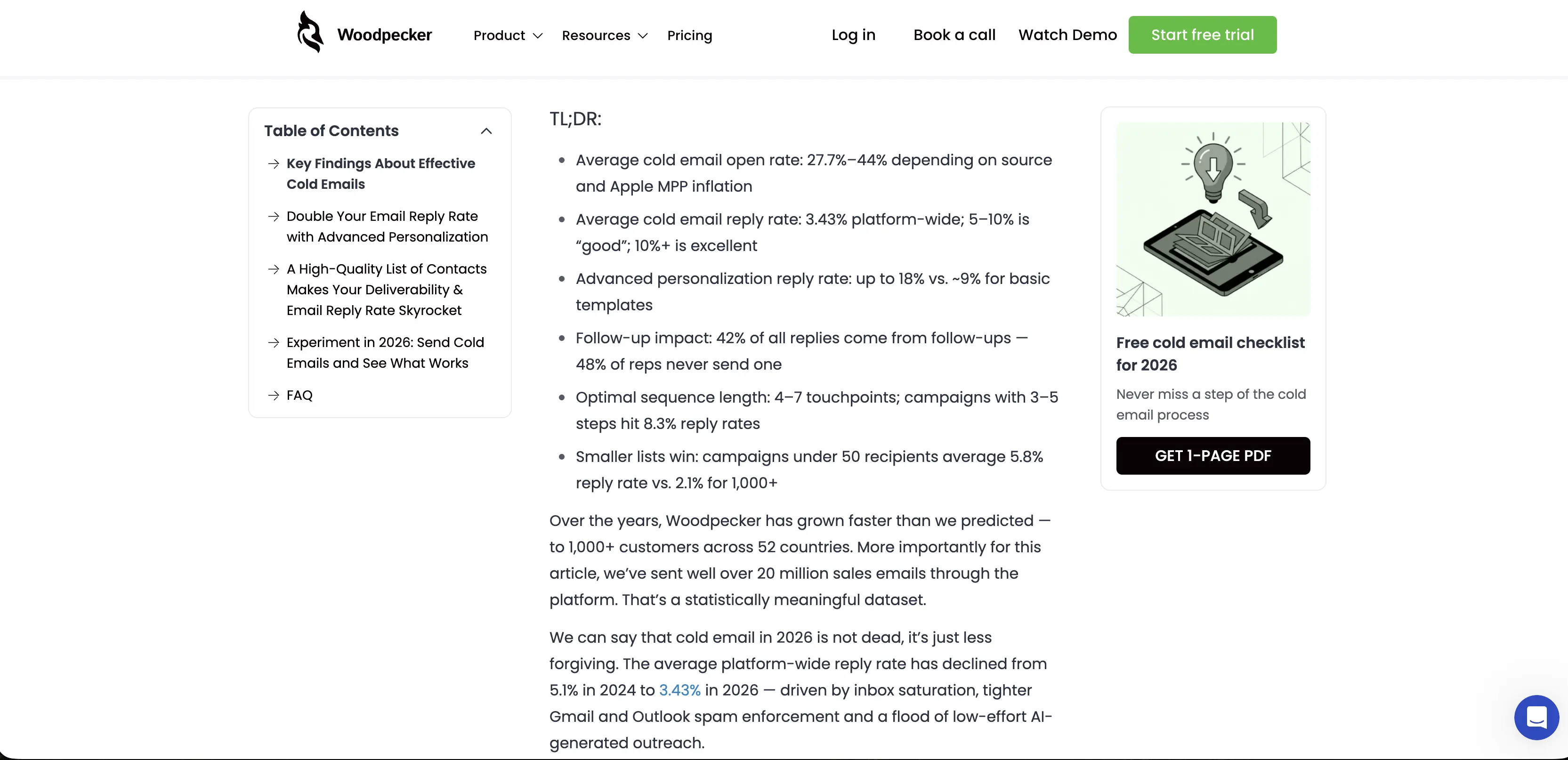
Following up too fast or abandoning too soon. A same-day follow up reads as pressure, and stopping after one email leaves most of the sequence's replies uncollected, since a meaningful share of total replies in benchmark data come from the second and third touches, not the first. Fix: hold the day 3, day 7 to 8, day 12 to 14, day 18 to 21 cadence from Stage 1.
Cold Email Follow up Templates: Sending Time
Touch | Day | Goal | Tone |
|---|---|---|---|
Initial email | Day 0 | Introduce and make one ask | Direct |
Follow up 1 | Day 3 | Add one new value item | Same, helpful |
Follow up 2 | Day 7 to 8 | Shift the angle | Confident, brief |
Follow up 3 | Day 12 to 14 | Low-pressure nudge | Casual |
Breakup | Day 18 to 21 | Offer an easy exit | Respectful, final |
FAQ: cold email follow up templates
How many follow-up emails should you send in a cold sequence?
Three to four after the initial email, spread over roughly three weeks, then a breakup email. Sequences shorter than this leave replies uncollected; sequences much longer tend to produce diminishing returns and higher unsubscribe rates.
How long should you wait before the first cold email follow up?
Around three days is the most common recommendation across current benchmark data. Waiting a single day reads as pressure; waiting two weeks lets the first email go cold.
Should a follow-up email use the same subject line?
Yes, for the first two follow ups. Reply in the original thread so the recipient has the context without needing to reread anything. A new subject line is reasonable only for the breakup email or when you are actually shifting to a different angle.
What is a breakup email in cold outreach?
The final message in a sequence, sent after several unanswered follow ups, that tells the prospect you are stopping and leaves the door open. It often outperforms the emails before it because it removes pressure entirely.
Do follow-up emails actually get more replies than the first email?
Follow ups collectively account for a large share of total replies in a sequence, since a meaningful part of any campaign's responses come after the initial send, not from it. A single-email campaign is leaving that share uncollected.
Before you send
Check the cadence dates are set, the first two follow ups reply in-thread, each touch adds one new thing instead of repeating the last, and the breakup email is ready before you need it. The templates above are a starting structure. The new information you add at each stage is what turns a follow up into a reason to reply, not a reason to hit delete.